
James Baldwin — a man who loved Black people so fiercely once observed what Islam had accomplished in communities that every institutional force had abandoned. James Baldwin commented that Islam has been:
“able to do what generations of welfare workers and committees and resolutions and reports and housing projects and playgrounds have failed to do: to heal and redeem drunkards and junkies, to convert people who have come out of prison and make men chaste and women virtuous and to invest both the male and the female with a pride and a serenity that hang about them like an unfailing light.”
Baldwin was not a Muslim. But he was honest. And honest men name what they see. James Baldwin saw men broken by the world restored with dignity. He saw those cast aside from prisoners, addicts, the forgotten rise again with discipline, purpose, and serenity. He described it as a light that surrounds them, something steady, something undeniable.
As a community organizer in Chicago, the former president Barack Obama encountered a Muslim who had once been a gang leader, a man shaped by the harshest conditions. Barack Obama describes the Muslim brother telling him that,“If it hadn’t been for Islam, man… I’d probably be dead.” The man inspired Barack Obama to read the Autobiography of Malcolm X.
Barack Obama says he read Baldwin, Ellison, Hughes, Wright, and Du Bois and found in them brilliance, honesty, and deep insight, but also a recurring anguish, exhaustion, bitterness, and self-doubt under the crushing force of racism. He says he kept finding “the same anguish, the same doubt,” and felt that even these great writers were eventually worn down by that corrosive pressure. But “only Malcolm X’s autobiography seemed to offer something different.” Barack Obama described Malcolm X as offering something different from the other great Black writers he had read. In Malcolm, he found “repeated acts of self-creation” and “a new and uncompromising order, martial in its discipline, forged through sheer force of will.”
This is what the unfailing light produces. Not men who are merely educated. Not men who are merely articulate about their oppression. But men who are transformed who do not explain their condition so much as they transcend it. Malcolm X did not become bitter under white supremacy.
I was once mentoring at a program for highly gifted high school students. These were young people on the path toward the finest universities in the country, students who had distinguished themselves academically in ways that opened doors most of their peers would never see.
Among them was one Black student, sixteen or seventeen years old. I noticed him carrying books — The Autobiography of Malcolm X among them, Islamic texts. He knew from my name I was Muslim and enthustiraclly greeted me, oh you are Muslim, I have been looking into Islam and wanted to embrace Islam but there was one thing stopping him.
I asked him what it was.
He told me he had a girlfriend. That he cared for her. That he knew, in the way that sincere people know things they would rather not have to face, that embracing Islam would mean letting her go out of integrity.
I looked at him for a long moment.
I said: Brother, you already know what you have to do.
Once you say the shahada and mean it something changes inside you. That unfailing light begins to burn in your chest. And what seems impossible before you step forward becomes, by Allah’s mercy, manageable after you do. You do not need to have already conquered every attachment before you come to this deen. You come. And the deen helps you become who you are meant to be.
Take the first step, and trust that Allah will make the path clear.
The unfailing light of the Black Muslim was inside of him.
I have carried that conversation with me. Not because of what I said, but because of what that young man represented: the next generation of Black Muslims who will carry this light forward. The ones who, like Malcolm before them, will not be products of their environment but transformers of it. Who will walk through the cities, through the prisons, through the institutions and the programs and the indifference and they will carry something that none of those systems manufactured and none of them can extinguish.
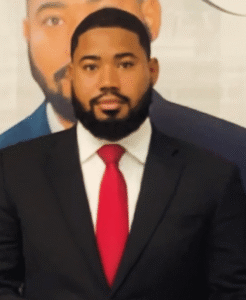
Written by Attorney Hakeem Muhammad
