
What must black America know about their enslaved African Muslim ancestors? Surprisingly, many are still not aware that a large number of Africans forcibly carried to these shores on slave ships were Muslim. So, the lessons that their arduous lives have to teach us is obscure. The past is recorded so that it can be learned from and we certainly can learn from all of our ancestors. However, the enslaved Muslims offer insights into preservation and resistance that can inform black identity, resistance, and the importance of a cultural values like patience and perseverance. Since Muslims were the most documented of all the slaves in antebellum America their exertions have survived.
The region of sub-Saharan West Africa was full of the brightest and most regal. So it bears mentioning that the trans-Atlantic slave trade was not like the other slave traffiking because the slaves were not like the others. The captives of war that would become Americas’ slaves and the foreparents of African-Americans came from kingdoms where Islam had been firmly established. The Fulani, Mandingo, Tukur, and Wolof are a few notable Muslim tribes that commanded vast territory. Their kingdoms and empires exhibited the hallmarks of civilization that made them comparable to other places in the world and superior to societies in Europe and its American colonies during the eighteenth and nineteenth centuries. A modest estimate places the Muslims among the enslaved Africans at twenty-five percent. I say modest because public records and slave traders’ journals did not concern itself with the cultural and religious distinctions among slaves but names like Said and Fatou bear the cultural signification of the Fula or the Mandingo whose tribes accepted Islam. Furthermore, some of the Muslims were so remarkable that whites wrote biographical accounts. Their travails and torturous ordeal reveal the importance that our Muslim ancestors placed on learning, faith, and justice.
Umar ibn Said, of the Fulbe tribe, was described as a prince by white visitors. There was no evidence that he was in fact a prince but what does come across in the numerous accounts of his appearance and demeanor is that he carried himself in a royal manner. Though enslaved he did not act like it. The Fulbe like the other tribes were a proud people and their circumstances could not purge them of their sense of dignity. The stately manner with which they comported themselves is a consistent reference to Muslims during this time.
Umar carried to America the stellar education he had received in Futa Jallon. Author Allan D. Austin wrote about Umar’s autobiography that “His most important activities in Africa–judging by the space he gave them in his autobiography–were his training in and practicing of the Five Pillars of Islam: the Quranic obligations on praying frive times a day, fasting, giving alms to the poor, fighting for the faith, and going on pilgrimages.” The handwritten autobiography was transcribed in Arabic. The language of liturgy and learning Arabic would become a medium of cultural retention. The prejudice of whites held that Africans were mentally inferior and incapable of anything that resembled civilization. The image of jungle-dwelling heathens formed the standard perception in the European mind. Africans like Umar threatened the very logic of slavery and anti-blackness.
The earliest known manuscripts of the autobiography begins with surah Al Fatihah:
All praises to Allah, Who created all of us to worship HIm. See what works they do; what they say; those who do good will have good; those who do evil will have evil.
He then introduces lines of poetry based on the Hadith (narrations of and about the Prophet Muhammad (saws) and his 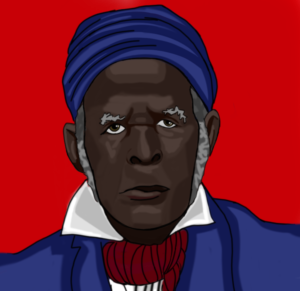 companions). Then he denounces what he considered the idolatry of the white world by referencing surah 53:21-23, followed by affirming the unity of all of the prophets that Allah has sent to guide humanity by referencing surah 2:285. Following this, he asks that Allah forgive the believer in the land of the unbelievers. Umar then references Africa writing “I am wanting you to know I want to be seen in a place called Africa in a place called Kaba in Bewir [Bure].” He ends by saying that Allah knows what is in his heart even if he can not openly proclaim it. His final manuscript was surah an Nasr “The Help.” He died uttering the shahadah “There is no God but Allah and Muhammad is HIs Messenger.”
Umar ibn Said identified as a Muslim African in America but not so much as a slave. It is hard to see yourself as a slave when you had been free and occupied a high standing in your own land. ‘Slave’ referred to his circumstance but not who he was. He exuded intelligence and the stature of a noble in defiance of that very circumstance. His condition was who he was on the inside and he used this to fight the conditions on the outside. The analogy is being submerged in water but holding your breath so that the water does not fill your lungs and you drown. This is the operation of virtually all of the enslaved but the Muslims have bequeathed personal narratives penned by themselves about how submerged in a foreign and hostile environment they were able to keep much of its perniciousness away from their souls.
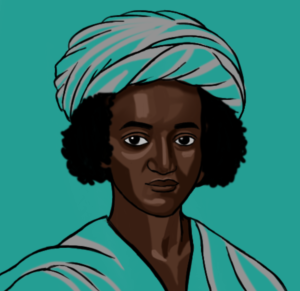
Ayuba boon Salumena, anglicized as Job Ben Solomon, was another Muslim captive in Maryland. He too was Fulani from a major clan of Futa Jallon and had come from a family of religious leaders and scholars. Job’s impressive demeanor drew much attention. He was said to have disputed with Christians over the oneness of the Creator. But his most impressive endeavor was when he wrote three Qurans from memory and translated them. According to his biographer Thomas Bluett he wrote in Arabic often. These letters and religious scripts made Job the talk of his town and beyond. He ended up meeting dignitaries in England and spoke with influential people in America with the expressed intention of returning to Africa, his home.
Job reproducing the Quran from memory shows how central Islam was to him and in Africa. Memorizing Quran was part of the education of his tribe just as learning the tribal history. It was customary in Futo Jallon to study the Quran from a young age. As one grew older they would learn about the book as part of a larger education that included Islam, history, and other disciplines. When in America enslaved he relied on its words to reinforce his worth in a society that was built on dehumanizing his people. This was Job’s soft resistance and it expresses the diverse ways African’s struggled to preserve their identity and worth in slavery. They were always resisting even when they were not physically engaged in war. They revolted by rejecting the slave owner’s religion, culture, and narrative which were meant to enslave their minds.
It was customary for many plantations to allow their slaves to work on Sunday and pay them
It was a pittance but many of the slaves took this opportunity and used the money to gamble and purchase alcohol. This is how many sought to alleviate the pain and suffering. Unfortunately, alcoholism and domestic abuse became a factor. Slave owners stepped in and ended this practice for those slaves who displayed recklessness since such behavior threatened their investment. Job ben Solomon gained his freedom. Part of what enabled him and other slaves to save the money towards manumission is that he did not spend it on frivolities. They saw it as an opportunity to get free.
Alcohol is forbidden in Islam. The Arabic word for alcohol means “that which veils the mind or impairs judgement.” Drugs and alcohol are often sought in order to cope with their condition. But experiencing every anguish of oppression with sound mind and body impels one to change their condition. Intoxicants do not free the mind they bind it to the oppression. Job ben Solomon, who “refused wine, so they concluded that Job was a Muslim,” gained his freedom through diligence and abstinance. He was not the norm and manumission was certainly an uphill battle. Escaping was more practical but these Muslim slaves practiced what they Quran taught which is that Allah will not change the condition of a people until the people first change what is in themselves.
Ibrahim Abdur-Rahman was also from Futa Jallon, versed in the Quran, literate in Arabic and carried himself like a prince. But there was one difference from Umar and Job: He was a prince. Ibrahim was the son of the king of Ibrahim Sori, the King of what is now Guinea and ruled from 1751 to 1784 and was part of the Islamic Confederation of Futo Jallon. Ibrahim was taken to Natchez Mississippi where he would end up the slave of Thomas Foster. It was when a white man, a doctor named John Cox, spotted Ibrahim and remembered him from having visited his kingdom.
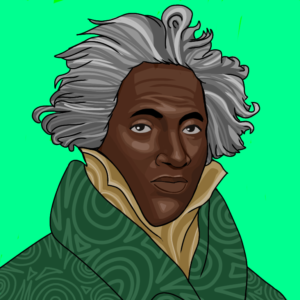 Ibrahim served as both prince and a military leader. In fact he was captured in battle and then sold to the Europeans. When he arrived in America he explained to the auctioneers who he was and that his family was rich and will pay any price for his return. Of course he was not believed until the doctor discovered him and pleaded for his release. When Ibrahim’s owner, Foster, learned that Ibrahim was not telling a tale he exploited his uniqueness to his own benefit. He mockingly called him prince and tried to bring himself notoriety by being known as the owner of African royalty who could write a strange language.
While in America Ibrahim constantly strengthened his African Muslim identity. He would often be seen writing Arabic in the sand using a stick. Like other enslaved Muslims he used his fanfare to gain his freedom. His literacy attracted the abolitionists. When asked to reproduce the Lord’s Prayer in Arabic he wrote the surah al Fatihah instead, the opening chapter of the Quran.
Ibrahim raised enough for the freedom of himself and his wife but sadly could not take their children. They departed for West Africa where they settled and started a new family. Their descendants are currently residing in Mississippi.
Abu Bakr was also a learned Muslim who interrupted his studies to visit his father’s grave. He was ensnared in conflict between local rivals where he was captured and sold to the Europeans. He recounted his harrowing experience:
“On that day I was made a slave. They tore off my clothes, bound me with ropes, laid on me a heavy burden, and carried me to the town of Buntukkú, and from thence to the town of Kumási, the king of Ashanti’s town.”
‘There they sold me to the Christians, and I was bought by a certain captain of a ship of that town. He sent me to a boat, and delivered me to the people of the ship. We continued on board ship, at sea, for three months, and then came on shore in the land of Jamaica. This was the beginning of my slavery until this day. I tasted the bitterness of slavery from them, and its oppressiveness; but praise be to God under whose power are all things, He doth whatever he willeth! No one can turn aside that which he hath ordained, nor can say one withhold that which He hath given! As God Almighty himself hath said:–Nothing can befal us unless it be written for us (in his book)! He is our master: in God, therefore, let all the faithful put their trust!”
Abu Bakr explains the source of his resolve:
“The faith of our families is the faith of Islam. They circumcise the foreskin; say the five prayers; fast every year in the month of Ramadan; give alms as ordained in the law… they fight for the faith of God; perform the pilgrimage [to Mecca]-i.e. Such as are able so to do; eat the flesh of no beast but what they have slain for themselves; drink no wine-for whatever intoxicates is forbidden unto them…..they teach their children to read, and [instruct them in] the different parts of knowledge..”
As can be seen from this account Islam was an integral part of his life and to his understanding of the misfortune that had befallen him. Faith is about a sense of possibility. The possibility to overcome present circumstances. It is part of the supra-will that enables the believer to face adversity. Instead of succumbing to pessimism or despair Abu Bakr availed the misfortune to affirm his indomitable spirit and trust in the will of the Creator.
What black America should know about their enslaved African Muslim ancestors is that their belief and trust in God was not a faith of convenience but it is during times of loss and duress that commitment to one’s ideals is evident They strove against all odds to continue practicing their obligatory prayers, fasting, and writing Quran. Stories like that Abu Bakr illustrate just how ingrained Islam was in the cultural DNA of the sub-Saharan West African villages.
Umar ibn Said, Ayyub Sulaiman, Ibrahima Abdur Rahman, and Abu Bakr were fiercely proud of being African and devout practitioners of Islam. They knew their worth in a world that deemed them worthless and by rejecting the value assigned to them by white society carved out an alternative existence wherein they could preserve their culture and faith. To accomplish this they weaponized the language of Arabic to communicate truths that were contrary to the master class. Their facsimilia were hard examples connecting them to their home across the Atlantic.
They used piety as a weapon in their struggle for liberation. The religion of Islam was not an opiate that dulled their ambition for change but was the motivating principle on which they strove for freedom. They were able to raise some of the money for their emancipation because they did not spend the meager money that earned working on Sundays purchasing alcohol. Many slaves dealt with the crushing condition of oppression through intoxication. These Muslim slaves faced their condition sober and with their clear minds crafted ways of preserving their African-Islamic education and acquiring freedom.
African-Americans have inherited the oppression they face but they have also inherited the tradition and methods of resistance to that oppression. If their descendants are to have any chance of transforming their condition they must return to the dictates of Islam that were followed by Umar, Solomon, Ibrahim, and the Maroons which armed the body and mind with discipline. It is imperative that they continue the fight by channeling the revolutionary spirit into constructive and substantive ways into productive ways.
Selected Readings
Allan D. Austin, African Muslims in Antebellum America: Transatlantic Stories and Spiritual Struggles (New York, NY: Routledge, 1997)
Sylviane A. Diouf, Servants of Allah: African Muslims Enslaved in the Americas (New York, NY: New York University Press, 1998)
John Davidson, Notes Taken During Travels in Africa (Morocco: J.L. Cox and Sons, 1839)

