
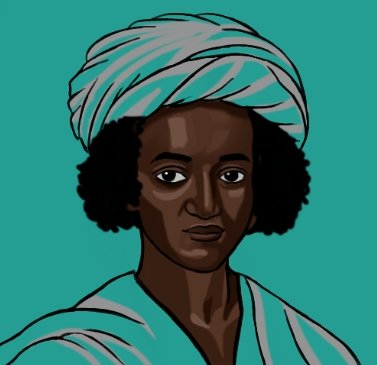
Ayuba Diallo:
The Qur’an
in Chains
This interactive Black Dawah Network page honors Ayuba Suleiman Diallo, also known in English sources as Job ben Solomon: a learned West African Muslim whose life moved from Bundu, to captivity in Maryland, to public witness in London, and back toward home.
Open Each Chapter
Choose a Chapter
Select a chapter from the exhibit map to reveal Ayuba’s story through artifacts: the Qur’an board, the broken chain, the prayer ground, the Arabic letter, the portrait, and the road home.
The Exhibit Is Waiting
This is designed to be more than a static biography. The visitor reads, taps, collects virtues, answers questions, and leaves with a deeper memory of Black Muslim history.
Chapter Challenge
Ayuba Diallo Timeline
Ayuba Suleiman Diallo was born in Bundu, in the Senegambian region of West Africa, into a Muslim Fulani family associated with religious learning and leadership.
His story begins before slavery: with family, Islamic learning, Arabic literacy, memory, trade, and African civilization.
He was taken into slavery and sent to colonial Maryland, where his name was translated into English as Job ben Solomon.
In captivity, the exhibit emphasizes his Muslim identity, his prayer, and the struggle to preserve worship while living under domination.
Ayuba reached London, where his learning and dignity forced observers to recognize the humanity and intellectual life of a Black Muslim captive.
Thomas Bluett’s account helped make Ayuba one of the most documented African Muslims in early Atlantic history. His story became a testimony against racist assumptions about African inferiority.
Ayuba’s life helps Black America remember that Islam among Black people is not new, foreign, or intellectually weak. It is part of a long historical inheritance.
Memory, Prayer, Witness
Game 1: Qur’anic Memory Challenge
This challenge honors the astonishing report that Ayuba had memorized the Qur’an by his teenage years and retained sacred knowledge even after the trauma of capture, the Atlantic slave trade, enslavement, and exile.
سورة الإخلاص
١. قُلْ هُوَ ٱللَّهُ أَحَدٌ
٢. ٱللَّهُ ٱلصَّمَدُ
٣. لَمْ يَلِدْ وَلَمْ يُولَدْ
٤. وَلَمْ يَكُن لَّهُۥ كُفُوًا أَحَدٌ
Study the Arabic order carefully. When the countdown ends, these verses will disappear.
This small exercise exists to highlight how extraordinary Ayuba’s Qur’anic memory was: an act of preservation, endurance, and sabr through kidnapping, slavery, displacement, and the terror of the slave trade.
Game 2: Put the Story in Order
Tap the events in the correct historical order. Press “check order” when finished.
Unlock the Exhibit Certificate
Visitors can complete the form below and prepare a private response summary. To keep contact details private, this public page does not display the curator’s email address.
1. What was central to Ayuba’s identity?
2. Where was he enslaved in the Atlantic world?
3. What does his story prove?
Champion of the Ayuba Diallo Exhibit
You completed the exhibit and learned how Qur’anic memory, Islamic faith, and Black dignity endured under the pressure of slavery. Carry the history forward.
Freedom, Faith, and Historical Memory
The Lesson for Black America
Ayuba’s story forces us to reject the lie that enslaved Africans arrived without religion, literacy, family, law, or civilization. He represents a Black Muslim past that was interrupted, not erased.
For Juneteenth, the point is not simply celebration. The point is historical recovery: naming the people whose faith survived the machinery built to strip them of name, language, kinship, worship, and dignity.
The BDN Call
Black Dawah Network should use figures like Ayuba Diallo to teach Black youth that Islam is not alien to Black history. It is part of a deep inheritance of scholarship, resistance, discipline, prayer, and public witness.
Program idea: use this page as a digital exhibit station at masjid open houses, Juneteenth events, Black history month events, and BDN street outreach tables.
For Further Study
Background on Ayuba as an educated West African Muslim, his enslavement in 1731, his arrival in London in 1733, and his later significance to abolitionist arguments. Read more
Catalog record for William Hoare’s 1733 portrait identifying Ayuba Suleiman Diallo / Job ben Solomon and cataloging him as scholar, translator, merchant, aristocrat, writer, and enslaved person. Read more
General historical context on African Muslims in early America, literacy, religion, and liberty. Read more
Early published account of Ayuba’s life, printed in 1734. Bluett reports that Ayuba could recite the whole Qur’an by heart by age fifteen and wrote copies from memory while in England. Read more
