
Black Dawah Network Research Initiative

Should
Black People
Be Salafist?

A Study of Islam, Black Self-Determination,
and Competing Visions for Black America
Black Dawah Network Research Initiative
By Shareef Muhammad & Hakeem Muhammad, Esq.
Scholarly Research
Historically Grounded
Focused on Black Advancement
Committed to Islamic Principles
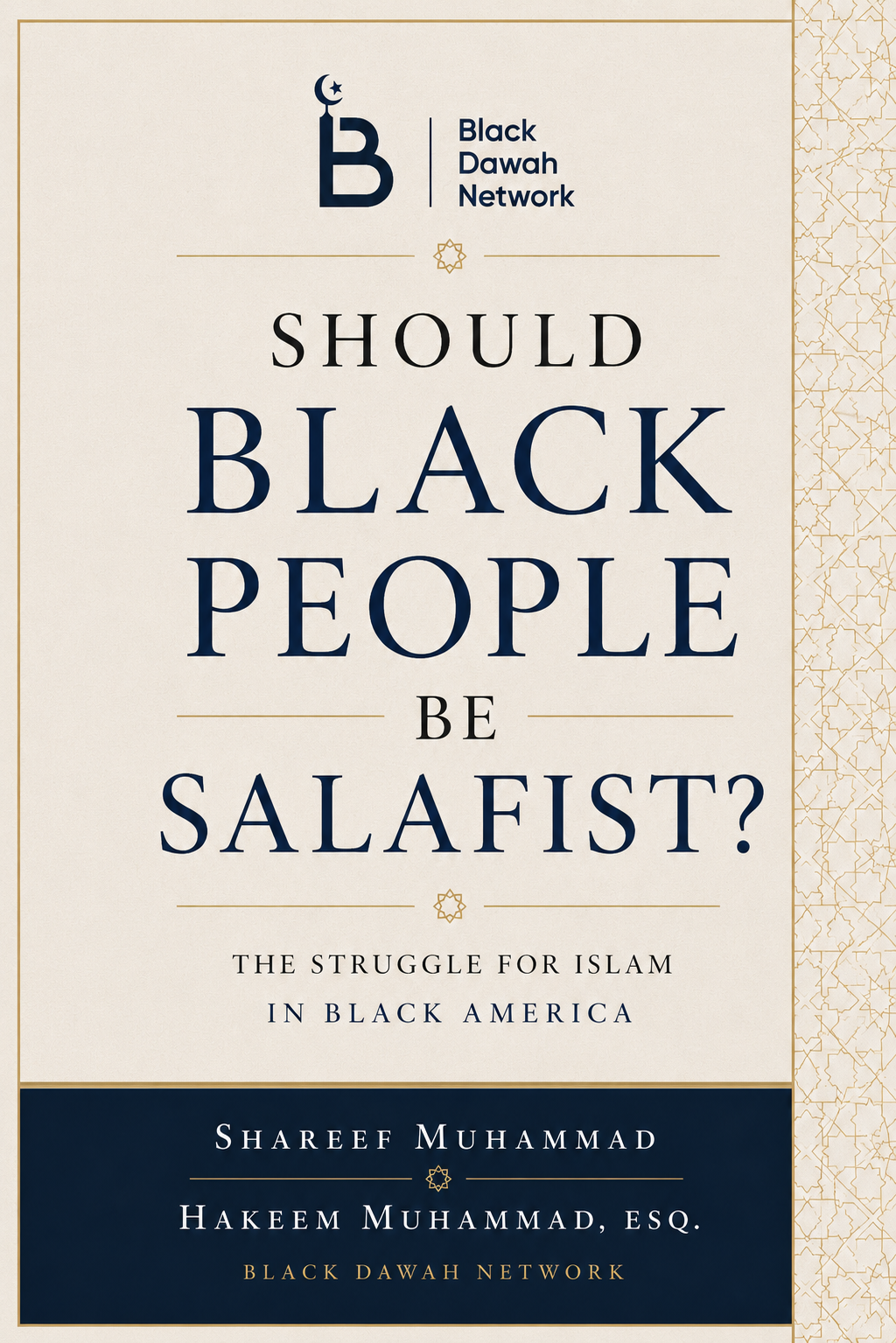
Should Black People Be Salafist?

This book argues that contemporary Salafism in Black America has failed to provide a viable intellectual, institutional, or social framework for Black Muslim life.

Islam historically spread among Black Americans as a civilizational force — producing institutions, disciplined communities, education, economic initiatives, moral reform, and political consciousness. Movements such as the Nation of Islam and the work of Imam Warith Deen Muhammad opened the door for hundreds of thousands, leading to the largest wholesale transition of Black people to orthodox Sunni Islam in U.S. history.

Salafism, by contrast, reduced Islam to doctrinal policing and ritual correctness while offering little engagement with the real conditions facing Black communities: racism, poverty, incarceration, addiction, family breakdown, and economic dependency.

This study examines the record. It asks not what Salafism claims to be, but what it has actually built.

The question is not whether Islam is true.
The question is whether Salafism has proven capable of building a thriving Black Muslim community. History provides the answer.
1
Failure to Address Black Reality
Salafism largely disengages from the specific historical and social realities facing Black Americans.
2
Failure to Produce Durable Institutions
Excels at criticism but has produced comparatively few enduring institutions capable of addressing the needs of Black communities.
3
Misrepresentation of Black Nationalism
Salafi critiques attack a caricature rather than engaging the actual literature and history. Collective self-determination is consistent with Islam and historical Muslim practice.
4
Historical Illiteracy Regarding Black Islam
Salafi critics misunderstand how Islam historically developed in Black America. The Nation of Islam, despite theological errors, was a major conduit into Islam for hundreds of thousands.
5
Failure to Meet the Institutional Test
A movement should be judged by its ability to educate, organize, reform, and sustain communities. After decades of influence, Salafism has not met that test.
Perspectives Examined in This Study
Authors

Hakeem Muhammad
Hakeem Muhammad, Esq.
Attorney, legal analyst, and co-author. Focuses on law, history, and the protection of Black communities.
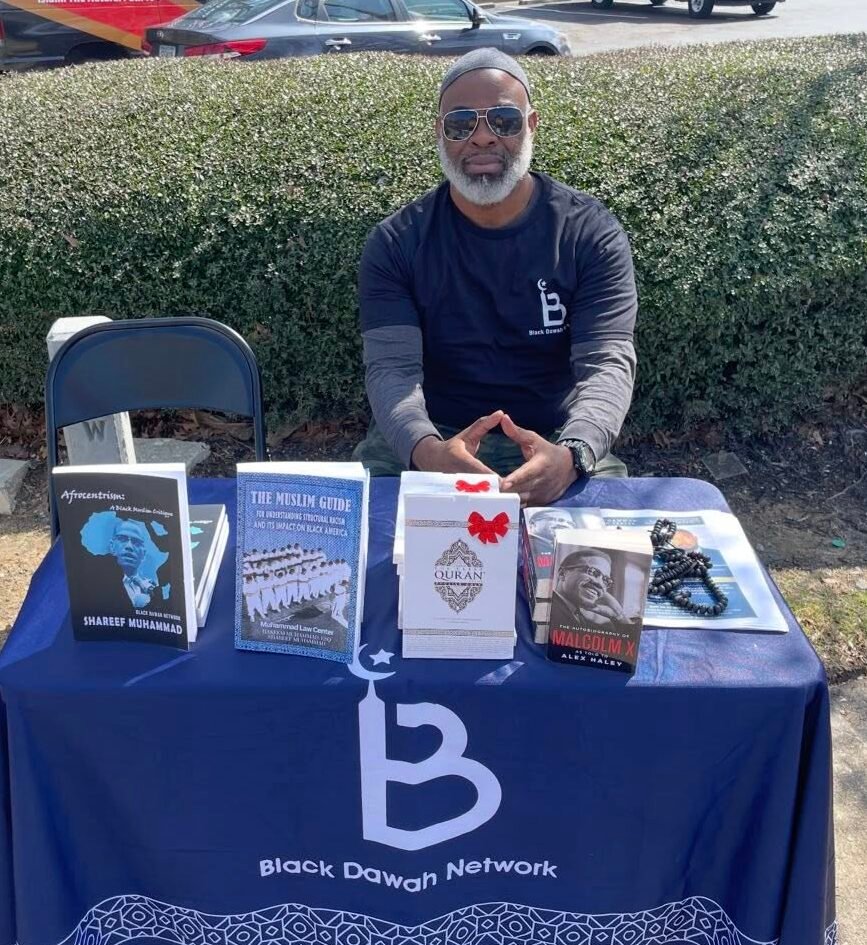
Shareef Muhammad
Shareef Muhammad
Researcher and co-author. Focuses on Islamic thought, political theory, and institution-building.
Perspectives Examined (Not Endorsed)
Examined Idris Palmer

Idris Palmer
Representative of contemporary Black Salafi thought and methodology.
Examined Anwar Wright

Anwar Wright
Salafi lecturer and critic of Black nationalism. His works are examined throughout this study.
This book examines these perspectives, their arguments, methods, and historical impact.
Our aim is not to cancel — but to understand. Not to silence — but to evaluate.
Should Black People Be Salafist?
Paperback Edition
Should Black People Be Salafist?
By Shareef Muhammad & Hakeem Muhammad, Esq.
  • 512 Pages
  • Endnotes & Sources
  • Scholarly & Accessible
  • Perfect for Study Circles & Classrooms
Buy Now Secure Checkout
Bulk Orders
Special pricing for mosques, schools, and organizations.
Scholarly & Referenced
Grounded in history, scripture, and social analysis.
Practical Frameworks
Strategies for building institutions and advancing Black communities.
For Leaders, Scholars & Community Members
Essential reading for anyone invested in the future of Black America.